13th Asian Monetary Policy Forum

Agenda
2026
Venue: Royal Pavilion Ballroom, Level 1
Conrad Singapore Orchard, 1 Cuscaden Rd, Singapore 249715
"The Global Economy in Multiple Complex Transitions"
Q&A Session
Chair: Professor Steven J. DAVIS
Thomas W. and Susan B. Ford Senior Fellow and Director of Research, Hoover Institution; Senior Fellow, Stanford Institute for Economic Policy Research; William H. Abbott Distinguished Service Professor Emeritus, University of Chicago Booth School of Business, and Exco Member, ABFER
2026
Venue: Royal Pavilion Ballroom, Level 1
Conrad Singapore Orchard, 1 Cuscaden Rd, Singapore 249715
“Europe and the World Economy"
"Features and Fragilities of the International Monetary System"
Professor Barry EICHENGREEN
George C. Pardee & Helen N. Pardee Chair and Distinguished Professor of Economics and Political Science, University of California, Berkeley
Professor Danny QUAH
Li Ka Shing Professor in Economics, Lee Kuan Yew School of Public Policy, National University of Singapore and Senior Fellow, ABFER
Chair: Professor Sumit AGARWAL
Low Tuck Kwong Distinguished Professor of Finance, Economics, and Real Estate; Managing Director of Sustainable and Green Finance Institute, National University of Singapore and President of ABFER
“Trump Trade Policy and the World Trade System”
Dialogue, Q&A
Chair: Professor Steven J. DAVIS
Thomas W. and Susan B. Ford Senior Fellow and Director of Research, Hoover Institution; Senior Fellow, Stanford Institute for Economic Policy Research; William H. Abbott Distinguished Service Professor Emeritus, University of Chicago Booth School of Business, and Exco Member, ABFER
Professor Viral V. ACHARYA
C.V. Starr Professor of Economics, Stern School of Business, New York University; Former Deputy Governor, Reserve Bank of India and Senior Fellow, ABFER
Professor Wenxin DU
Professor of Finance and Sylvan C. Coleman Professor of Financial Management, Harvard Business School, Harvard University
Professor Ross LEVINE
Booth Derbas Family/Edward Lazear Senior Fellow, Hoover Institution, Stanford University and Senior Fellow, ABFER
Chair: Professor Amit SERU
The Steven and Roberta Denning Professor of Finance, Stanford Graduate School of Business, Stanford University and Vice President of ABFER
Chronological Order of Speakers
-
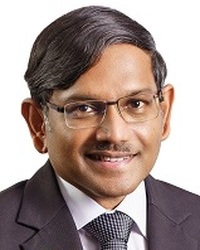
Mr Edward ROBINSON
Deputy Managing Director (Economic Policy) and Chief Economist, Monetary Authority of Singapore and Member of ABFER Council
Edward Robinson has been with the MAS since 1992 and has been involved in macroeconometric modeling and is responsible for heading a team engaged in the continuing developmental work for the suite of MAS models, which are used for policy analysis. He has also been involved in other areas of economic policy work including in various inter-agency work groups which looked at the structural challenges facing the Singapore economy. He served on the Board of the Singapore Competition Commission between 2005 and 2007. He studied economics and applied econometrics at Monash University and the University of Melbourne.
-
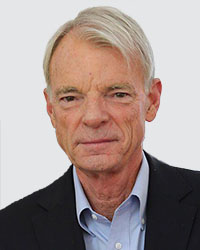
Professor Michael SPENCE
Recipient of the 2001 Nobel Memorial Prize in Economic Sciences; Philip H. Knight Professor and Dean, Emeritus, Stanford Graduate School of Business, Stanford University
Michael Spence is the Philip H. Knight Professor Emeritus of Management in the Graduate School of Business at Stanford University, a Senior Fellow of the Hoover Institution at Stanford and a Distinguished Visiting Fellow of the Council on Foreign Relations. He is an Senior Professor at Bocconi University in Milan, and an Honorary Fellow of Magdalen College, Oxford University, and a Distinguished Academic Visitor at Queens’ College, Cambridge.
In 2001, he received the Nobel Prize in Economic Sciences for his work in the field of information economics.
He is the author of “The Next Convergence: The Future of Economic Growth in a Multispeed World,” Farrar, Straus and Giroux (May 10, 2011). His new book, written with Gordon Brown, Mohamed El-Erian and Reid Lidow is “Permacrisis: How to Fix a Fractured World,” Simon and Schuster, Sept 2023.
He is a Senior Advisor to Jasper Ridge Partners and a Senior Advisor to General Atlantic Partners. He chairs the Advisory Boards of the Asia Global Institute and the MBZ University of Artificial Intelligence. He was the Chairman of The Independent Commission on Growth and Development (2006-2010). He is a member of the Advisory Councils of the Luohan Academy in Hangzhou and the Digital Economy Lab at Stanford. He served as Dean of the Stanford Business School from 1990 to 1999 and Dean of the Faculty of Arts and Sciences at Harvard University from 1984 to 1990.
He was awarded the John Kenneth Galbraith Prize for excellence in teaching and the John Bates Clark Medal, awarded to American economists under age 40 for a "significant contribution to economic thought and knowledge."
From 1984 to 1990, Spence served as the dean of the Faculty of Arts and Sciences at Harvard, overseeing Harvard College, the Graduate School of Arts and Sciences, and the Division of Continuing Education.
From 1977 to 1979, he was a member of the Economics Advisory Panel of the National Science Foundation and in 1979 served as a member of the Sloan Foundation Economics Advisory Committee. At various times, he has served as a member of the editorial boards of American Economics Review, Bell Journal of Economics, Journal of Economic Theory, and Public Policy. -
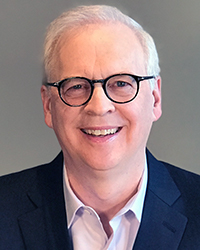
Professor Steven J. DAVIS
Thomas W. and Susan B. Ford Senior Fellow and Director of Research, Hoover Institution; Senior Fellow, Stanford Institute for Economic Policy Research; William H. Abbott Distinguished Service Professor Emeritus, University of Chicago Booth School of Business, and Exco Member, ABFER
Steven J. Davis is the Thomas W. and Susan B. Ford Senior Fellow and Director of Research at the Hoover Institution and senior fellow at the Stanford Institute for Economic Policy Research. He is a visiting scholar at the Federal Reserve Bank of Atlanta and co-founder of the Economic Policy Uncertainty project, the Survey of Business Uncertainty, the U.S. Survey of Working Arrangements and Attitudes, and the Global Survey of Working Arrangements. He co-organizes the Asian Monetary Policy Forum, held annually in Singapore and hosts Economics, Applied, a biweekly podcast that brings evidence and economic thinking to major issues.
Davis is a research associate of the National Bureau of Economic Research, senior academic fellow with the Asian Bureau of Finance and Economic Research, former adviser to the U.S. Congressional Budget Office, senior adviser to the Brookings Papers on Economic Activity, advisor to the Economic Policy Group of the Monetary Authority of Singapore, past editor of the American Economic Journal: Macroeconomic, elected fellow of the Society of Labor Economists, and a member of the American Academy of Sciences and Letters. -
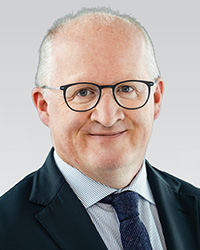
Dr Philip R. LANE
Chief Economist and Member of the Executive Board, European Central Bank
Philip R. Lane joined the European Central Bank as a Member of the Executive Board in 2019. He is responsible for the Directorate General Economics and the Directorate General Monetary Policy. Before joining the ECB, he was the Governor of the Central Bank of Ireland. He has also chaired the Advisory Scientific Committee and Advisory Technical Committee of the European Systemic Risk Board and was Whately Professor of Political Economy at Trinity College Dublin. He is also a research fellow at the Centre for Economic Policy Research. A graduate of Trinity College Dublin, he was awarded a PhD in Economics from Harvard University in 1995 and was Assistant Professor of Economics and International Affairs at Columbia University from 1995 to 1997, before returning to Dublin. In 2001 he was the inaugural recipient of the Bernácer Prize for outstanding contributions to European monetary economics.
-
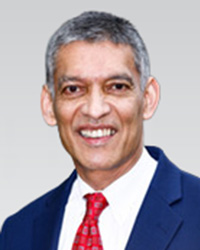
Professor Eswar PRASAD
Nandlal P. Tolani Senior Professor of International Trade Policy, Cornell University
Eswar Prasad is the Tolani Senior Professor of Trade Policy and Professor of Economics at Cornell University. He is also a Senior Fellow at the Brookings Institution, where he holds the New Century Chair in International Economics, and a Research Associate at the National Bureau of Economic Research. He is a former head of the IMF’s China Division.
Prasad is the author of “The Doom Loop: Why the World Economic Order Is Spiraling into Disorder” (Hachette, 2026). His previous book, “The Future of Money: How the Digital Revolution is Transforming Currencies and Finance” (Harvard University Press, 2021), was listed among the best economics books of the year by the Economist, Financial Times, and Foreign Affairs. Prasad is also the author of “Gaining Currency: The Rise of the Renminbi” (Oxford, 2016) and “The Dollar Trap: How the U.S. Dollar Tightened Its Grip on Global Finance” (Princeton, 2014). His op-ed articles have appeared in the Financial Times, Foreign Affairs, Foreign Policy, Harvard Business Review, New York Times, Wall Street Journal, and Washington Post. -
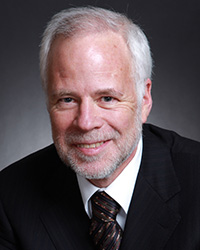
Professor Barry EICHENGREEN
George C. Pardee and Helen N. Pardee Chair and Distinguished Professor of Economics and Political Science, University of California, Berkeley
Barry Eichengreen is George C. Pardee and Helen N. Pardee Chair and Distinguished Professor of Economics and Professor of Political Science at the University of California, Berkeley. He is a Research Associate of the National Bureau of Economic Research and Research Fellow of the Centre for Economic Policy Research. In 1997-98 he was Senior Policy Advisor at the International Monetary Fund.
Professor Eichengreen is a fellow of the American Academy of Arts and Sciences (class of 1997). He is a distinguished fellow of the American Economic Association (class of 2022), a corresponding fellow of the British Academy (class of 2022), a corresponding member of the Lisbon Academy of Sciences (class of 2025), and a Life Fellow of the Cliometric Society (class of 2013). He has held Guggenheim and Fulbright Fellowships and been a fellow of the Center for Advanced Study in the Behavioral Sciences (Palo Alto) and the Institute for Advanced Study (Berlin). For 15 years from 2004 he served as convener of the Bellagio Group of academics and officials. He is a regular monthly columnist for Project Syndicate.
Professor Eichengreen has been awarded the Economic History Association's Jonathan R.T. Hughes Prize for Excellence in Teaching and the University of California at Berkeley Social Science Division's Distinguished Teaching Award. He is the recipient of a doctor honoris causa from the American University in Paris, and was the 2010 recipient of the Schumpeter Prize from the International Schumpeter Society and the 2022 recipient of the Nessim Habif Prize for Contributions to Science and Industry. He was named one of Foreign Policy Magazine's 100 Leading Global Thinkers in 2011. He is a past president of the Economic History Association (2010-11).
His most recent book is In Defense of Public Debt with Asmaa El-Ganainy, Rui Esteves and Kris Mitchener (Oxford University Press 2021) -
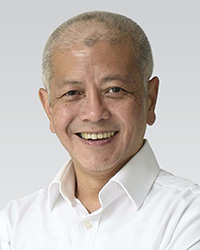
Professor Danny QUAH
Li Ka Shing Professor in Economics, Lee Kuan Yew School of Public Policy, National University of Singapore and Senior Fellow, ABFER
Danny Quah is Li Ka Shing Professor in Economics at the Lee Kuan Yew School of Public Policy. His research interests lie in international economic relations, economic growth and development, and income inequality and social mobility. Quah’s current projects (1) study the modern practice of economic statecraft (including how to build the next multilateralism); and (2) analyze the impact of fraying multilateralism on economic growth and social mobility.
Among other positions, Quah serves on the World Bank President’s Economic Advisory Panel; the World Bank Group Institute for Economic Development’s Advisory Board; the World Economic Forum’s Global Future Council on Geopolitics; and Tsinghua University School of Public Policy and Management’s Global Advisory Board.
Quah was previously Assistant Professor of Economics at MIT, and then at LSE Professor of Economics and International Development, and Director of the Saw Swee Hock Southeast Asia Centre. At LSE he also served as Head of Department for Economics. At the School Quah served as Dean 2018-2025.
Quah studied at Princeton, Minnesota, and Harvard. -
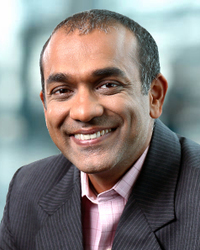
Professor Sumit AGARWAL
Low Tuck Kwong Distinguished Professor of Finance, Economics, and Real Estate; Managing Director of Sustainable and Green Finance Institute, National University of Singapore and President of ABFER
Sumit Agarwal is a distinguished professor and thought leader in the fields of finance, economics, and real estate, currently serving as the Low Tuck Kwong Distinguished Professor of Finance, Economics, and Real Estate at the National University of Singapore (NUS). He is the Managing Director of the Sustainable and Green Finance Institute, Head of the Department of Real Estate, and President of the Asian Bureau of Finance and Economic Research. Sumit has been with NUS since 2018, shaping the institution’s research and educational priorities in his areas of expertise.
A global academic, Agarwal earned his Ph.D. in Economics, M.A. in Economics, and B.Sc. in Computer Science from the University of Wisconsin-Milwaukee. Prior to his tenure at NUS, he held academic and professional roles at Georgetown University, the Federal Reserve Bank of Chicago, and Bank of America, where he gained extensive experience in finance and credit risk management. Agarwal has published over 125 academic papers, with his research appearing in prestigious journals such as the Review of Financial Studies, Journal of Financial Economics, and American Economic Review. His work spans a range of topics including household finance, sustainability, financial institutions, and behavioral economics, receiving over 17,000 citations (Google Scholar, January 2024). He has also authored multiple books, including "Household Financial Management" (2023) and "Kiasunomics" series, widely recognized for bridging academic insights and practical implications.
Agarwal’s impact extends beyond academia. He is a Senior Fellow at the Asian Bureau of Finance and Economic Research and serves as a consultant to the Monetary Authority of Singapore. Additionally, he is an advisory board member for Point Carbon Zero at Google Cloud and a management board member of the Institute for Real Estate Studies at NUS. He has received numerous accolades, including the Quarterly Journal of Finance Best Paper Award (2023) and the Distinguished Alumni Achievement Award from the University of Wisconsin-Milwaukee (2017).
Sumit is deeply engaged in shaping economic policy and advancing sustainability. His applied research and consultancy work focus on real-world challenges in household sustainability, financial inclusion, and green finance. He has collaborated with prominent institutions such as the Financial Conduct Authority (UK), the Bank for International Settlements, and the Inter-American Development Bank, among others. His teaching, consulting, and editorial contributions reflect his commitment to fostering innovation and evidence-based policy in global finance.
A seasoned academic leader, Agarwal has also served in numerous editorial roles, including Associate Editor for the Journal of Financial Stability and Management Science. He has organized and participated in over fifty academic conferences and workshops worldwide, making significant contributions to the discourse on finance and economics. -
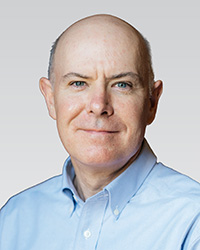
Professor Douglas A. IRWIN
John French Professor of Economics, Dartmouth College
Douglas Irwin is John French Professor of Economics at Dartmouth College. He is the author of Clashing over Commerce: A History of U.S. Trade Policy (University of Chicago Press, 2017), which The Economist and Foreign Affairs selected as one of their Best Books of the Year.
He is the author of Free Trade Under Fire (Princeton University Press, fifth edition 2020), Trade Policy Disaster: Lessons from the 1930s (MIT Press, 2012), Peddling Protectionism: Smoot-Hawley and the Great Depression (Princeton University Press, 2011), The Genesis of the GATT (Cambridge University Press, 2008, co-authored with Petros Mavroidis and Alan Sykes), Against the Tide: An Intellectual History of Free Trade (Princeton University Press, 1996), and many articles on trade policy and economic history in books and professional journals.
He is a Research Associate of the National Bureau of Economic Research and a non-resident Senior Fellow at the Peterson Institute for International Economics. He was president of the Economic History Association (2023-24). He worked on trade policy issues while on the staff of President Ronald Reagan's Council of Economic Advisers and later worked in the International Finance Division at the Board of Governors of the Federal Reserve System in Washington, D.C. Before joining Dartmouth, Irwin taught at the University of Chicago's Booth School of Business. -
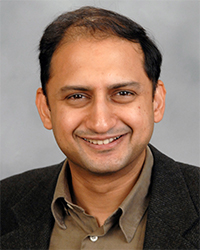
Professor Viral V. ACHARYA
C.V. Starr Professor of Economics in the Department of Finance, Stern School of Business, New York University and Senior Fellow, ABFER
Viral V. Acharya is the C.V. Starr Professor of Economics in the Department of Finance at New York University Stern School of Business (NYU-Stern). He was a Deputy Governor at the Reserve Bank of India (RBI) during January 2017 to 23rd July 2019 in charge of Monetary Policy, Financial Markets, Financial Stability, and Research. He is a Research Associate of the National Bureau of Economic Research (NBER) in Corporate Finance and International Finance and Macroeconomics, a Research Affiliate at the Center for Economic Policy Research (CEPR), and Research Associate of the European Corporate Governance Institute (ECGI). He is a member of the Bundesbank Research Council since January 2025 and an invited member of the Bellagio Group of academics and policy-makers from central banks and finance ministries since 2021.
He is or has been an Academic Advisor to the Federal Reserve Banks of Chicago, Cleveland, Kansas City, New York and Philadelphia, and the Board of Governors, and has provided Academic Expert service to the Bank for International Settlements, the International Monetary Fund and the World Bank. He was a member of the Climate-related Financial Risk Advisory Committee (CFRAC) of the Financial Stability Oversight Council for 2023-26, a Scientific Advisor to the Sveriges Riksbank (February 2024-January 2026), and also a member of the Financial Advisory Roundtable (FAR) of the Federal Reserve Bank of New York for 2020-25.
His primary research interest is in theoretical and empirical analysis of systemic risk of the financial sector, its regulation and its genesis in government- and policy-induced distortions, an inquiry that cuts across several other strands of research – credit risk and liquidity risk, their interactions and agency-theoretic foundations, as well as their general equilibrium consequences. In recent work, he has also studied inflation uncertainty and the impact of pandemic and climate-change related risks. -

Professor Wenxin DU
Sylvan C. Coleman Professor of Financial Management and Professor of Finance, Harvard Business School, Harvard University
Wenxin Du is a Professor of Finance and the Sylvan C. Coleman Professor of Financial Management at the Harvard Business School. She studies global currency and fixed income markets, central banking, financial regulations, and emerging market finance. She was the recipient of 2022 Award for Economics in Central Banking, and was named the Alfred P. Sloan Foundation Research Fellow 2021-2023.
Prior to joining Harvard, Du was Henry Kaufman Professor of Financial Institutions at Columbia Business School and a professor of finance at the University of Chicago Booth School of Business. She also held full-time positions as Financial Research Advisor at the Federal Reserve Bank of New York and Principal Economist at the Board of Governors of the Federal Reserve System. She was a central bank research fellow at the Bank for International Settlements in Basel, Switzerland.
She is a research associate at the National Bureau of Economic Research and co-leads the initiative on Market Frictions and Financial Risks, and currently serves on the academic advisory committee for the Bank for International Settlements and Federal Reserve Bank of Dallas. She is also an associate editor at the Journal of Financial Economics, Journal of International Economics, and Review of Financial Studies.
She earned an A.M. and a Ph.D. both in Economics from Harvard University, and a B.A. in Economics and Mathematics from Swarthmore College with Highest Honors. -
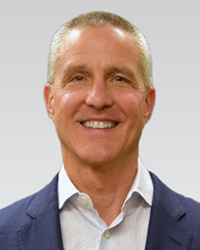
Professor Ross LEVINE
Booth Derbas Family/Edward Lazear Senior Fellow, Hoover Institution, Stanford University and Senior Fellow, ABFER
Ross Levine is the Booth Derbas Family/Edward Lazear Senior Fellow at the Hoover Institution and co-director of Hoover’s Financial Regulation Working Group. He is a founding member of the Hoover Program on the Foundations for Economic Prosperity. Levine is also a Research Associate at the National Bureau of Economic Research. Prior to joining Hoover, Levine was a faculty member at the University of California, Berkeley’s Haas School of Business.
Levine’s research explains how financial regulations and the functioning of financial systems influence economic prosperity, including growth, stability, technological innovation, entrepreneurship, job opportunities, poverty, income distribution, and the environment. Besides authoring or editing six books, he has published nearly 200 articles in leading economics, finance, and management journals.
Two of his books, Rethinking Bank Regulation: Till Angels Govern and Guardians of Finance: Making Regulators Work for Us, along with numerous articles, highlight the complexities of regulatory policies. He demonstrates that these policies often hinder competition, disrupt the efficient allocation of capital, and promote excessive risk-taking, which negatively impacts living standards.
Levine’s research resonates beyond academia, shaping dialogue and policies at major international institutions like the World Bank, International Monetary Fund, and European Central Bank. He serves as an advisor to central banks and regulatory authorities worldwide, and his work has been highlighted in leading media outlets such as the Wall Street Journal, Financial Times, The Economist, The Washington Post, and Barron’s.
Having earned a BA from Cornell University and a PhD in economics from UCLA, Levine worked at the Board of Governors of the Federal Reserve System and the World Bank, where he conducted and managed research and operational programs. In addition to his research and policy contributions, Levine has received several teaching awards at Berkeley, Brown University, and the University of Virginia. -
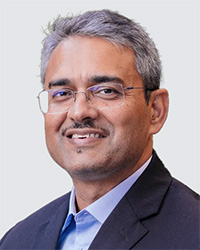
Professor Amit SERU
The Steven and Roberta Denning Professor of Finance, Stanford Graduate School of Business, Stanford University and Vice President of ABFER
Amit Seru is The Steven and Roberta Denning Professor of Finance at Stanford Graduate School of Business, a senior fellow at the Hoover Institution and Stanford Institute for Economic Policy Research (SIEPR), and a research associate at the National Bureau of Economic Research (NBER). He was formerly a faculty member at the University of Chicago’s Booth School of Business.
Professor Seru’s research focuses on corporate finance with an emphasis on financial intermediation and regulation, technological innovation and incentive provision, and financing in firms. His research in these areas has been published in American Economic Review, Journal of Political Economy, Quarterly Journal of Economics, Review of Economic Studies, Journal of Finance, Journal of Financial Economics, Review of Financial Studies, and other peer-reviewed journals. He was previously a co-editor of the Journal of Finance, an editor of Review of Corporate Finance Studies, department editor (Finance) of Management Science, and an associate editor of the Journal of Political Economy.
He has presented his research to U.S. and international regulatory agencies, including the Bank for International Settlement (BIS), Consumer Finance Protection Bureau (CFPB), European Central Bank (ECB), Federal Reserve, Federal Deposit Insurance Corporation (FDIC), Financial Industry Regulatory Authority (FINRA), the International Monetary Fund (IMF) and the Monetary Authority of Singapore (MAS). Most recently, he gave the Biennial Andrew Crockett lecture on regulation of banks in the era of fintechs to central bank governors around the world at the BIS. He has received various National Science Foundation grants, the Alexandre Lamfalussy research fellowship from BIS, and was named as one of the Top 25 Economists under 45 by the International Monetary Fund in 2014. His research has been featured in major media, including the Wall Street Journal, The New York Times, the Financial Times, and the Economist.
Seru earned a BE in electronics and communication and an MBA from the University of Delhi. Subsequently, he received a PhD in finance from the University of Michigan. He was a senior consultant at Accenture before pursuing his PhD. Seru was the recipient of a Rackham Pre-Doctoral Fellowship at University of Michigan and received a Lt. Governor’s gold medal for overall academic excellence at the University of Delhi.
- 1
Organizers
